A home whose richness is built on the disciplined repetition of colour and form, not on the number of pieces.
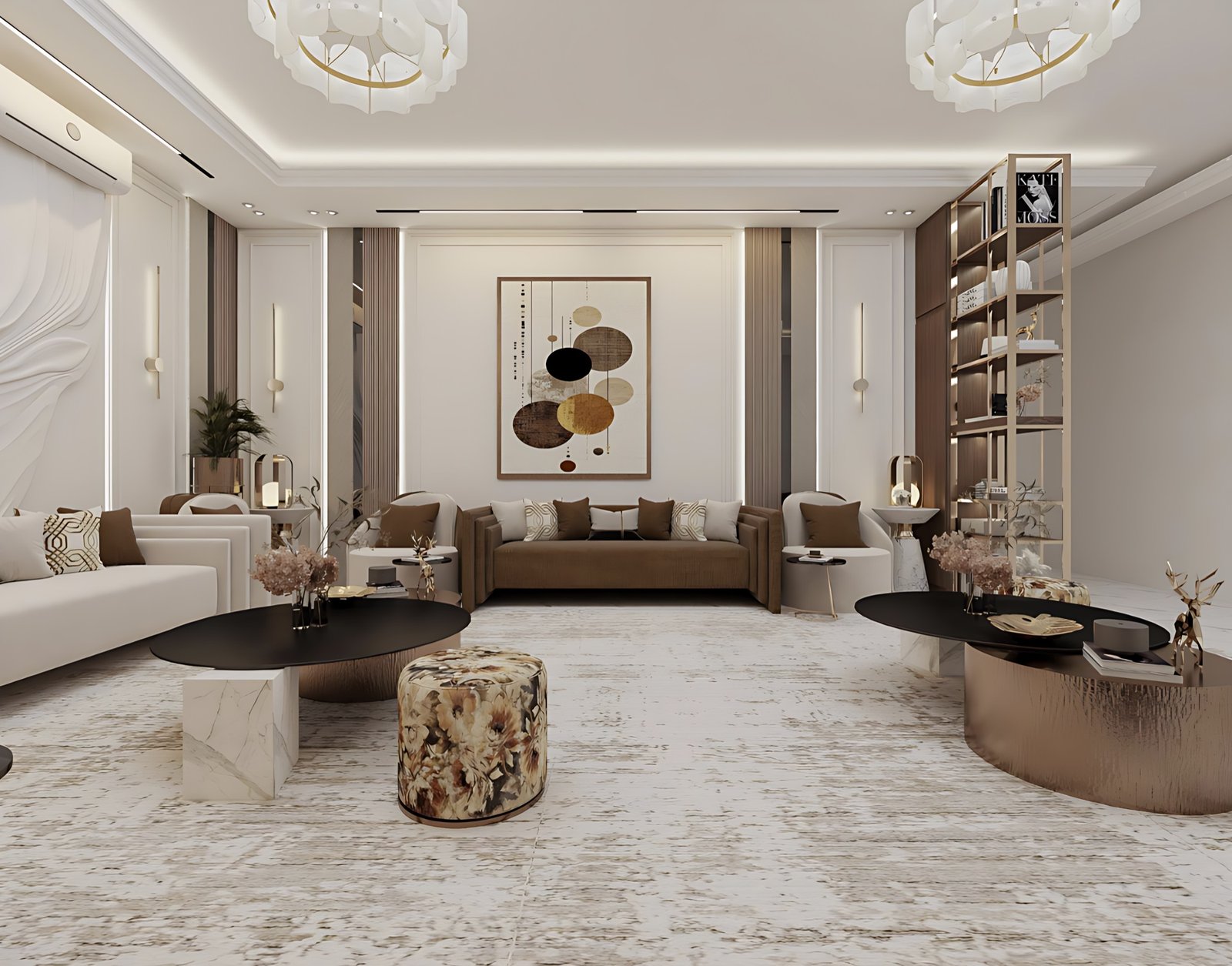
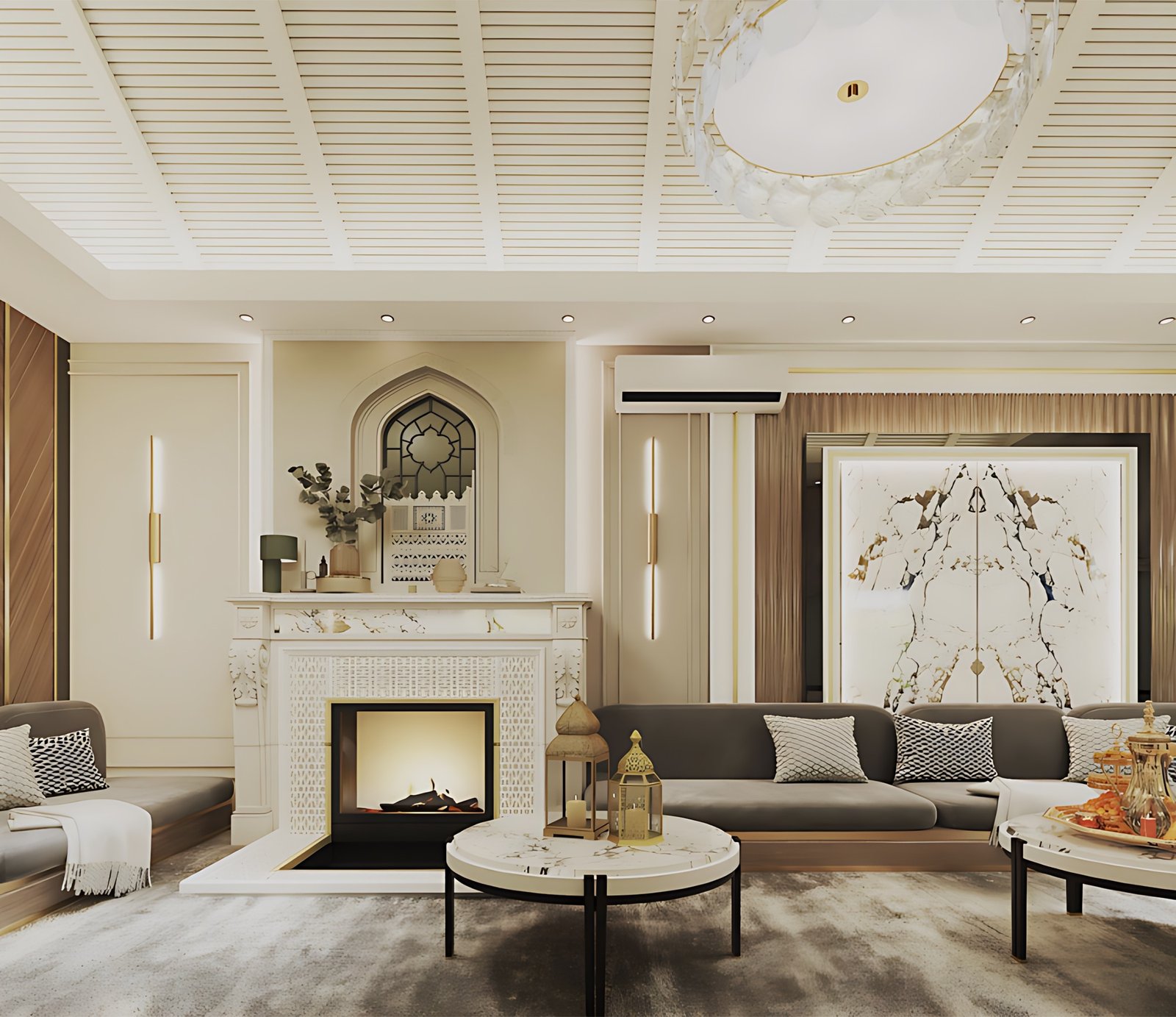
Round tables soften the corners and open up the circulation.
Three colours, no more
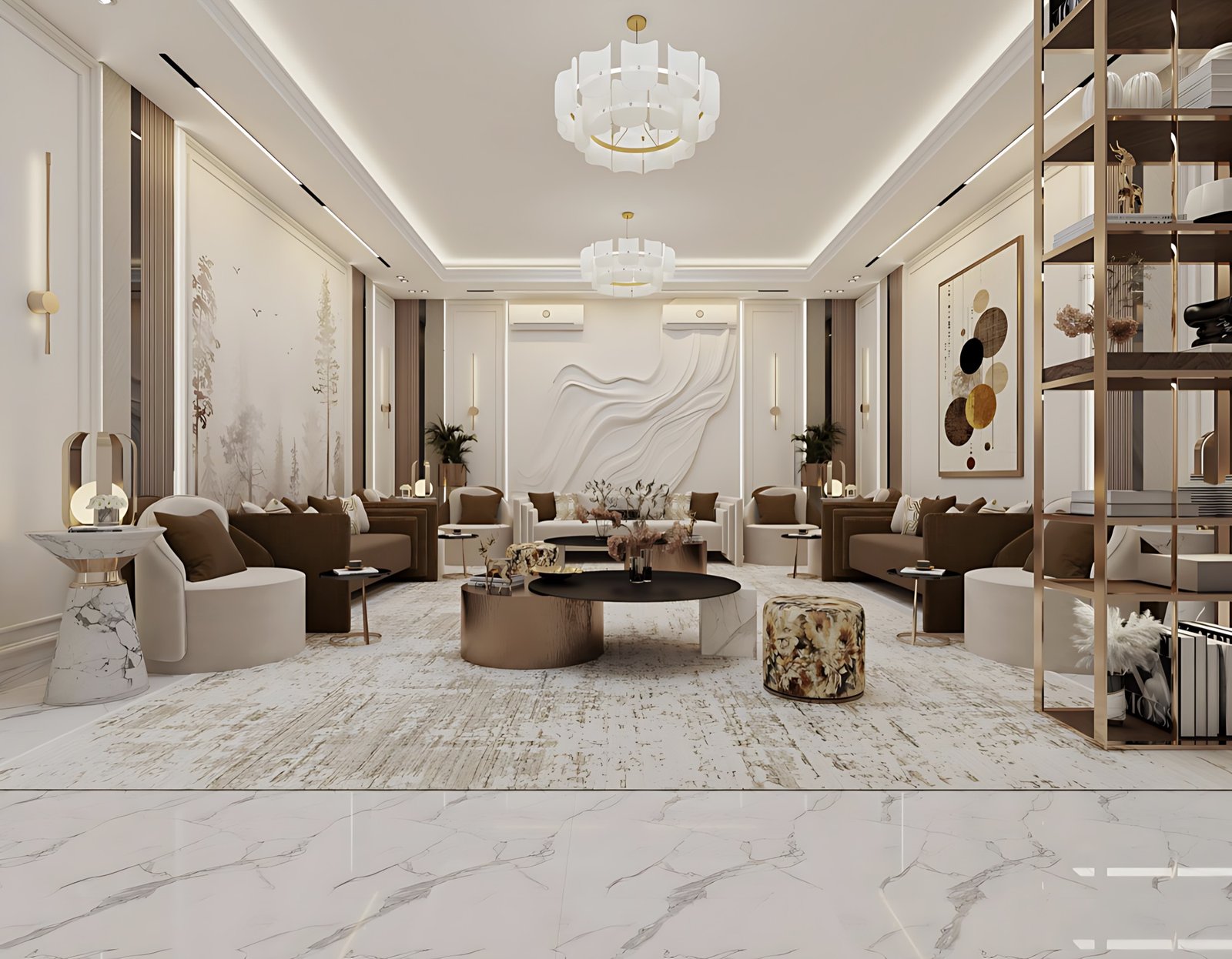
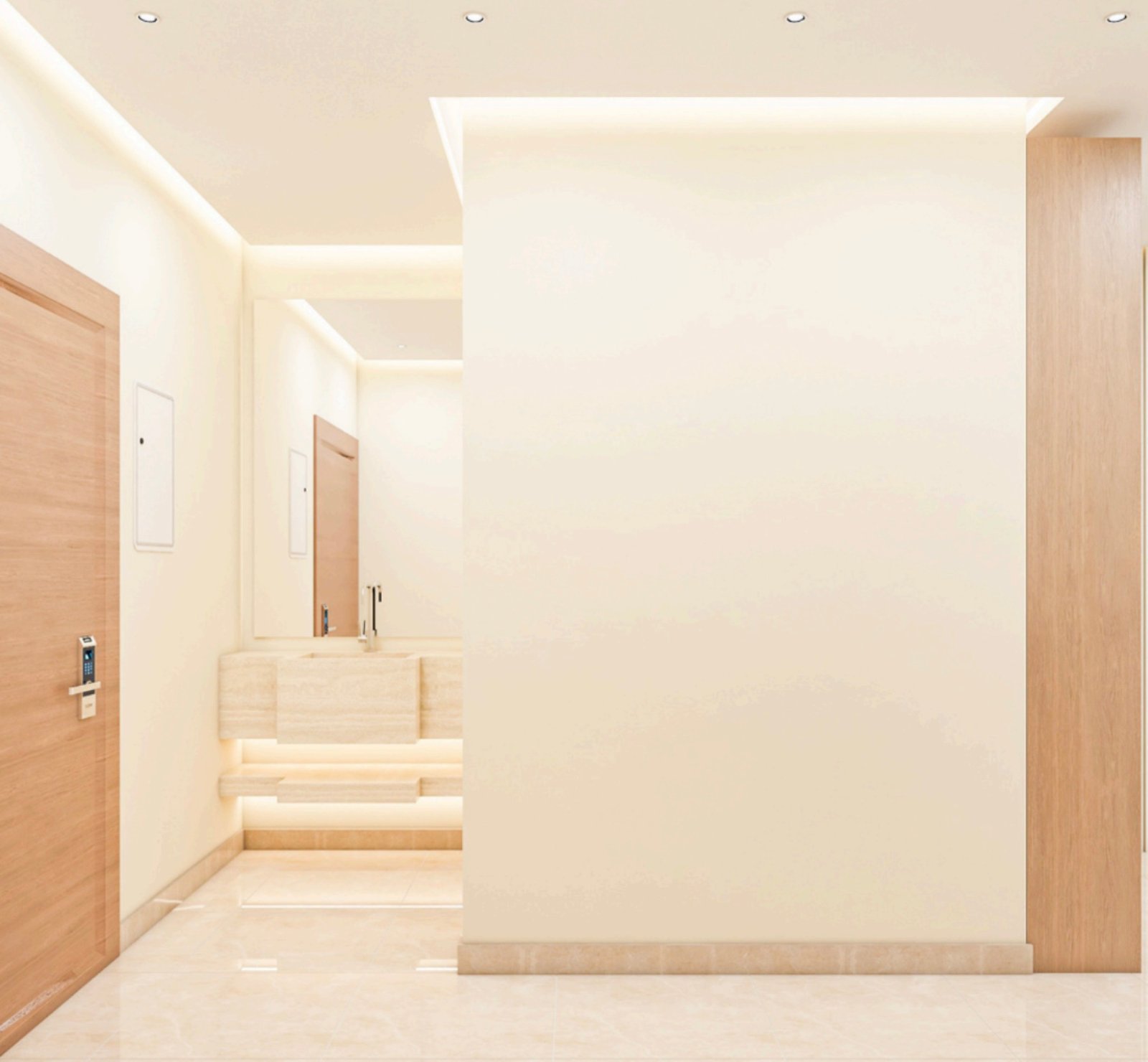
Ivory for the large surfaces, brown for the natural materials, gold for the small details. This strict division of roles is what makes the home read as one piece despite the different functions of its rooms.
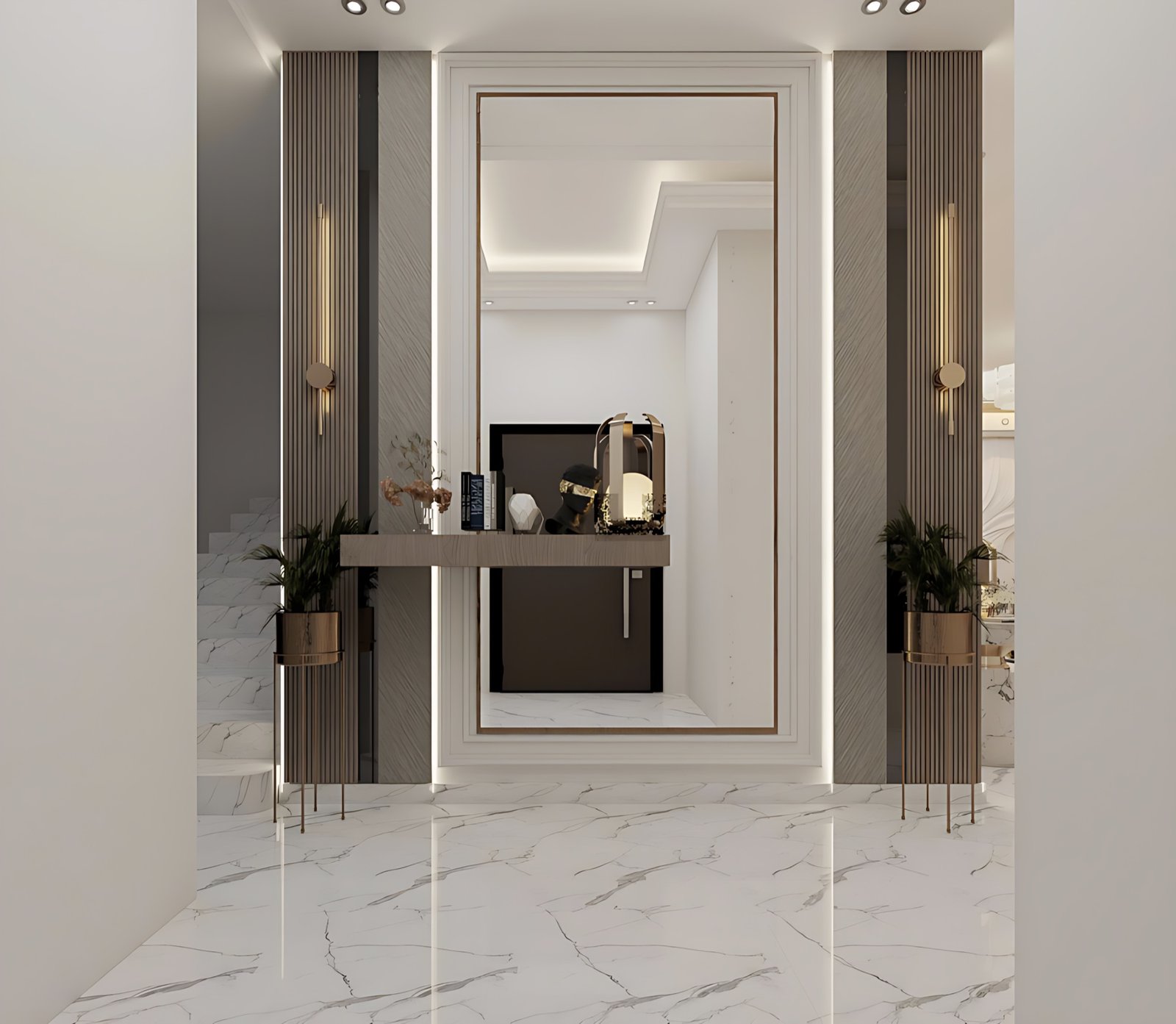
When the same colour repeats through the living room, the library and the hallway, the resident feels they are moving through a single house rather than between rooms each designed on its own.
The round table is a practical decision
The seating groups here gather around round tables, and the choice is functional before it is formal: a circle removes sharp corners from the circulation and allows a flexible number of people to sit without anyone stranded at an end.
Visually the round form acts as a rest among furniture dominated by straight lines, and stops the room turning into a grid of rectangles.
Fluted walls and open timber shelving add a third dimension to the surfaces. The shadow the fluting casts on itself changes the look of the wall as light moves through the day.
The open library does the same at a larger scale: recesses, shadows and personal objects give the wall a life it would never have as a closed surface.
Abstract art as a place to stop
The abstract artworks are the one place where departure from the palette is allowed. Their presence is necessary: a fully neutral space needs a point that draws the eye and gives the wall a reason to be looked at.
Choosing abstraction in particular leaves the reading open, and makes the work something you can live with for years without it wearing out.
In short
Rhythm before pieces
What holds this home together is not a single piece of furniture but a repeated rhythm of colour, material and form. Once the rhythm is set, any later addition is easy, and any new piece finds its place without effort.