A commercial project that takes its vocabulary from traditional craft, then rebuilds it in the language of today.
Palm weave and natural textile: a heritage reference read in contemporary terms.
From craft to identity
The name of the project comes from the craft itself, and that set the direction from the start. The reference was never treated as ornament added at the end, but as the ground the materials and details were built on.
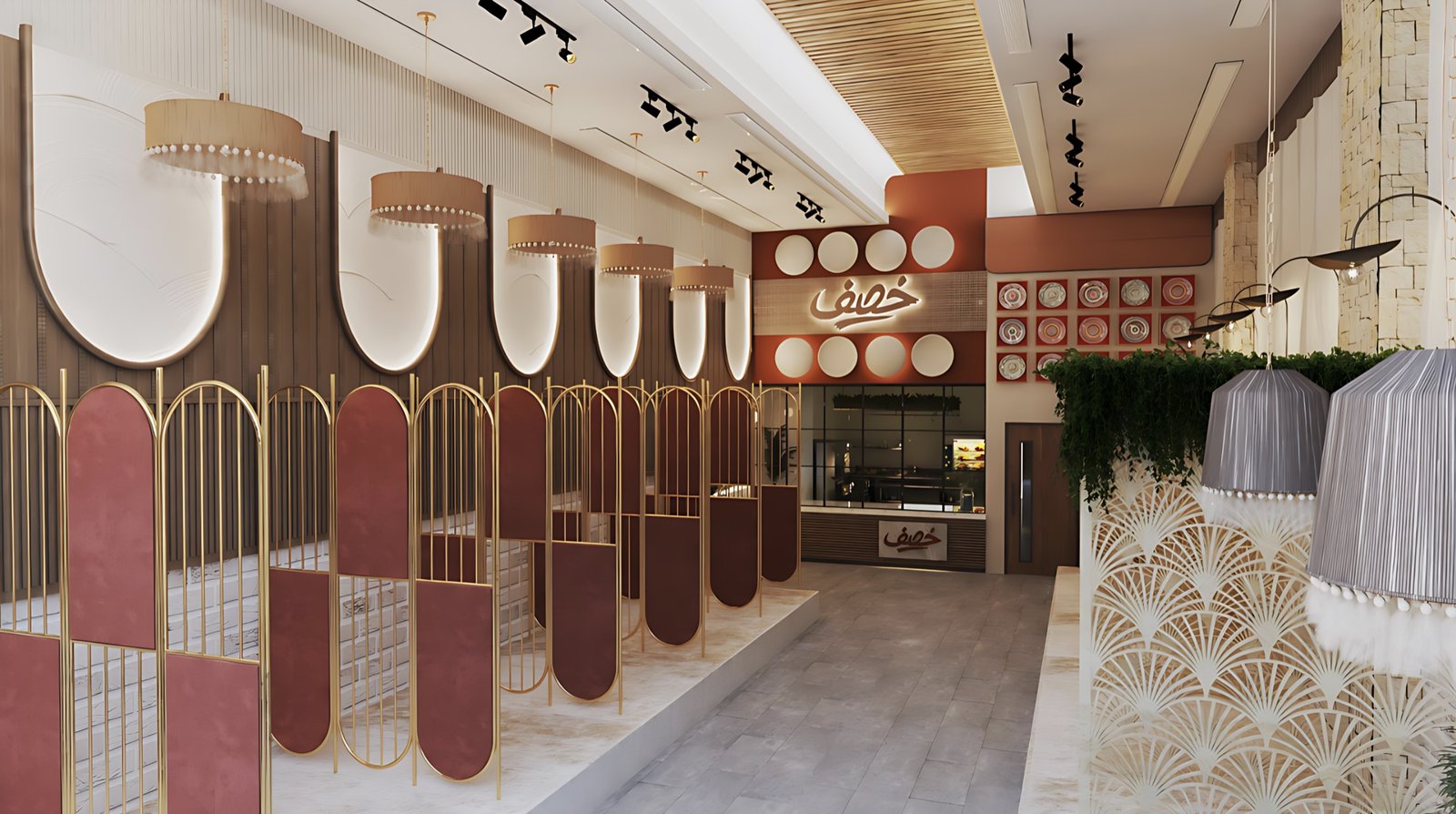
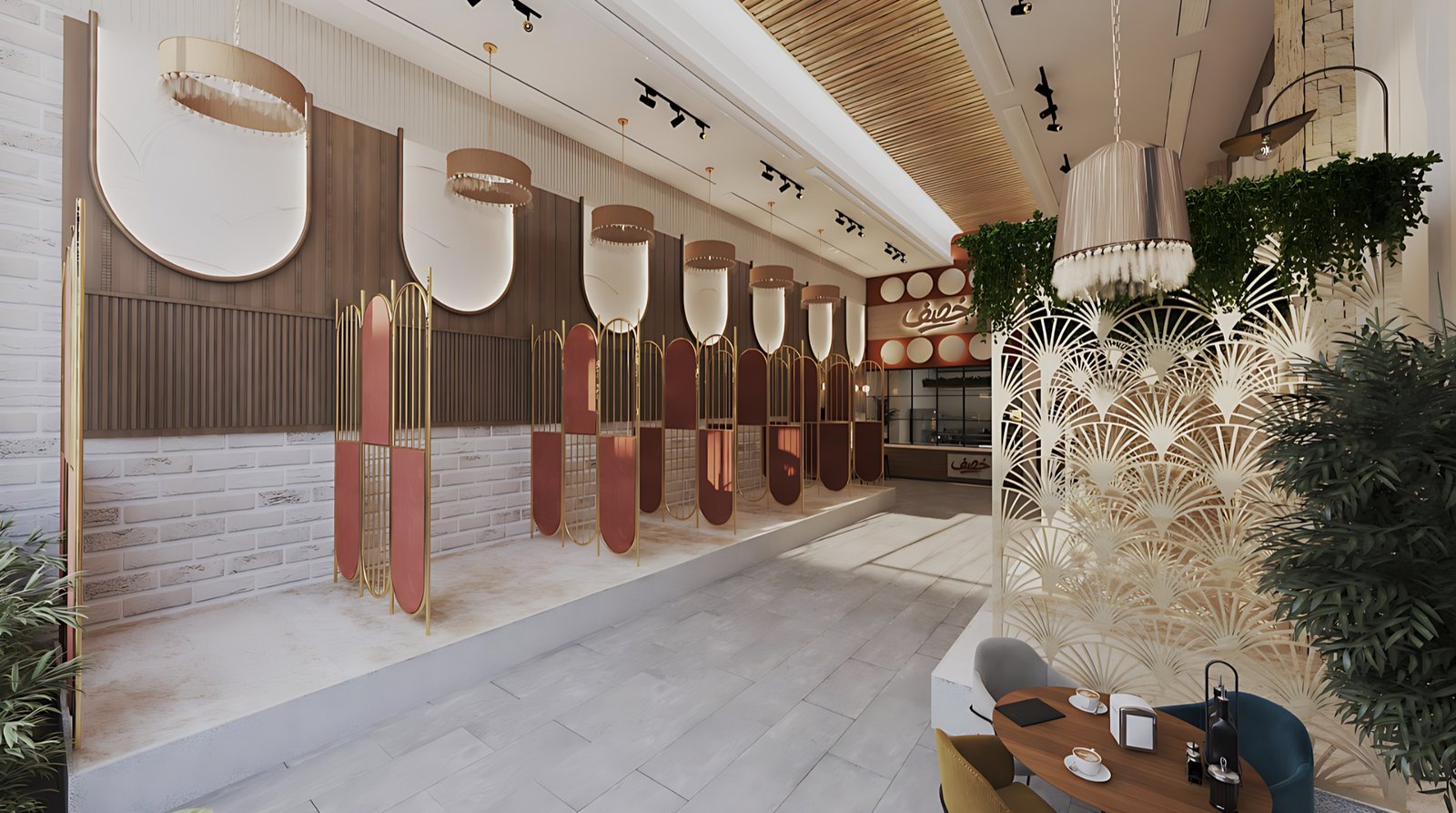
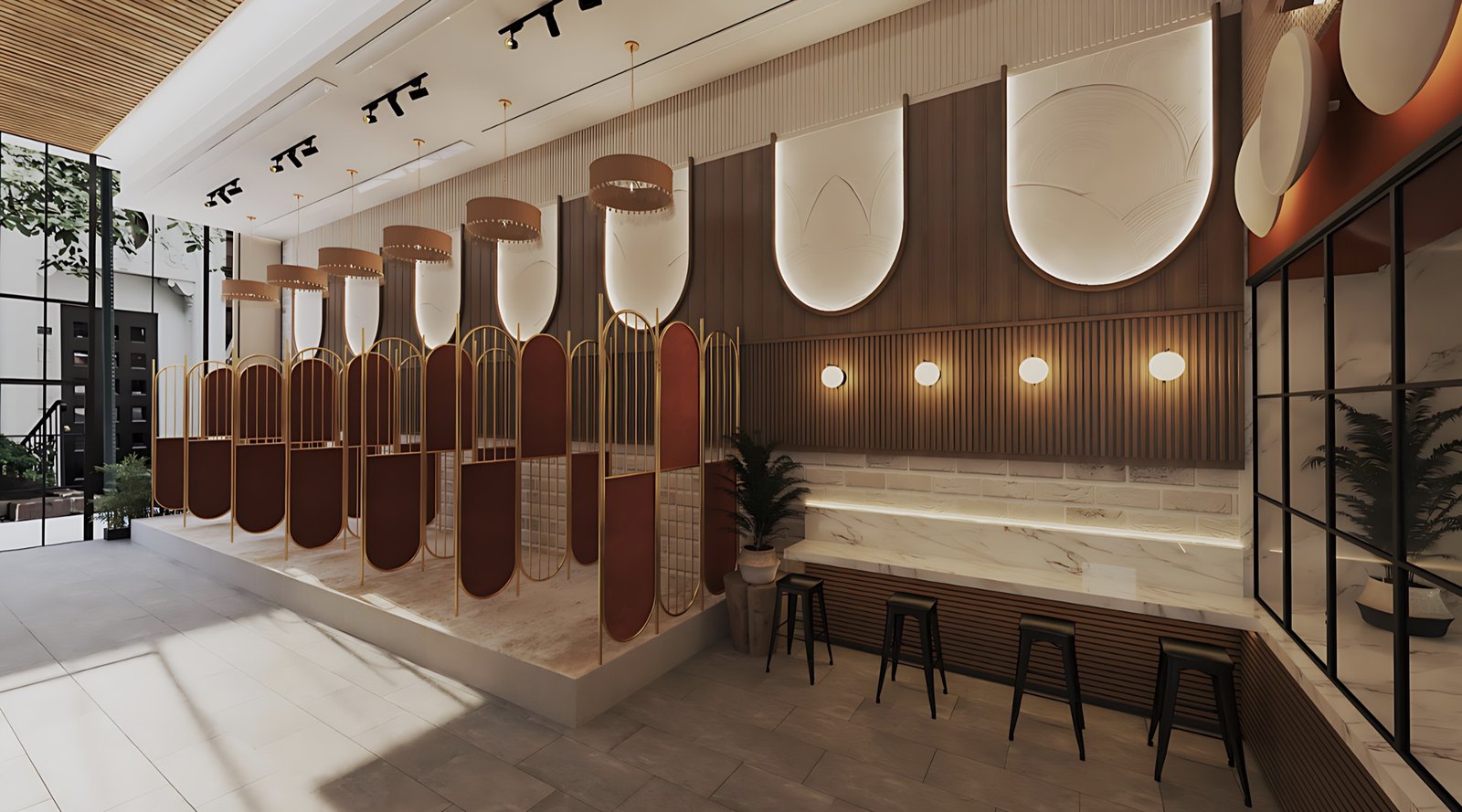
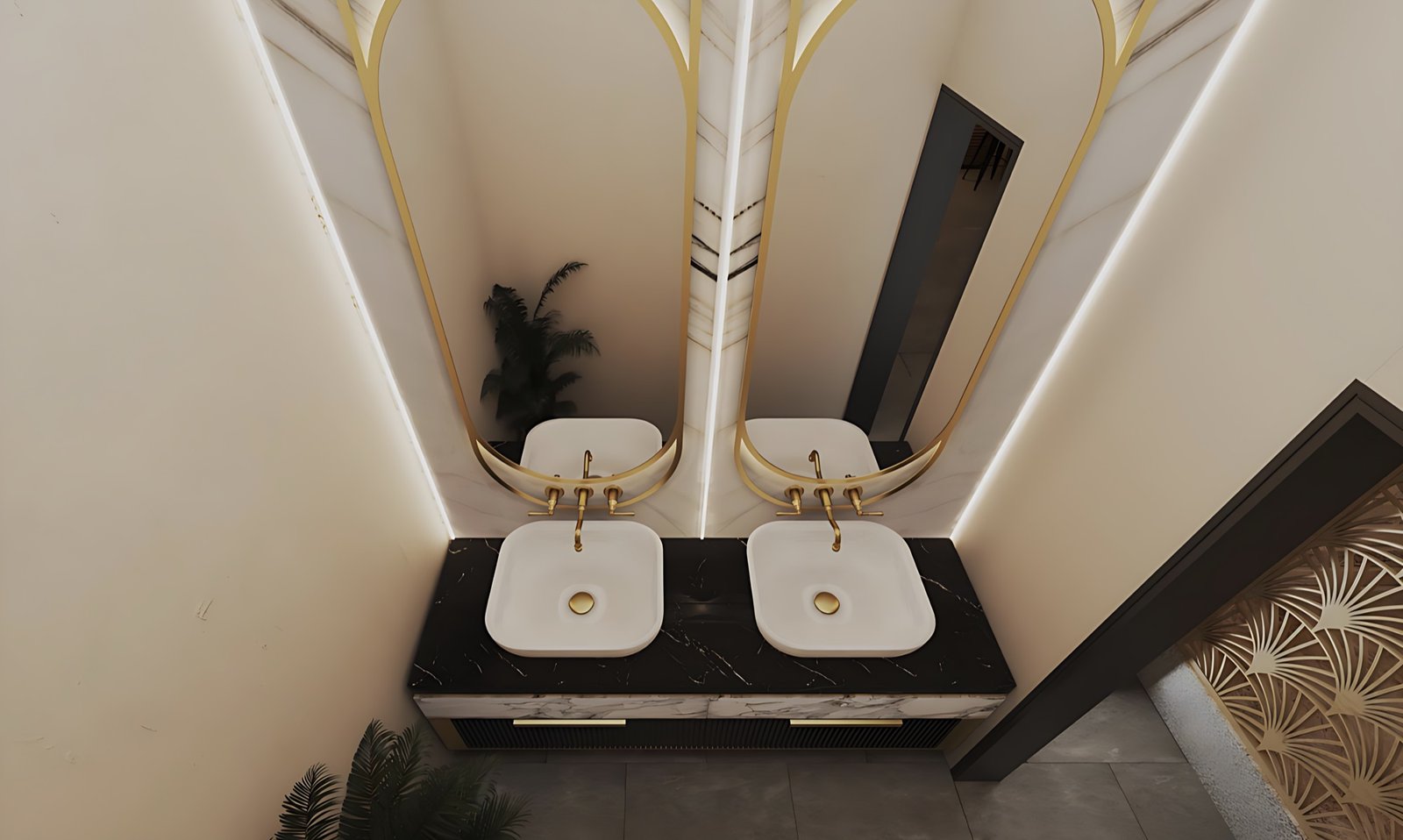
Palm weave and natural textile appear in the ceilings, the screens and the small details, at different scales. Repetition across scales is what turns an element from a touch into an identity.
Earth tones serve the food
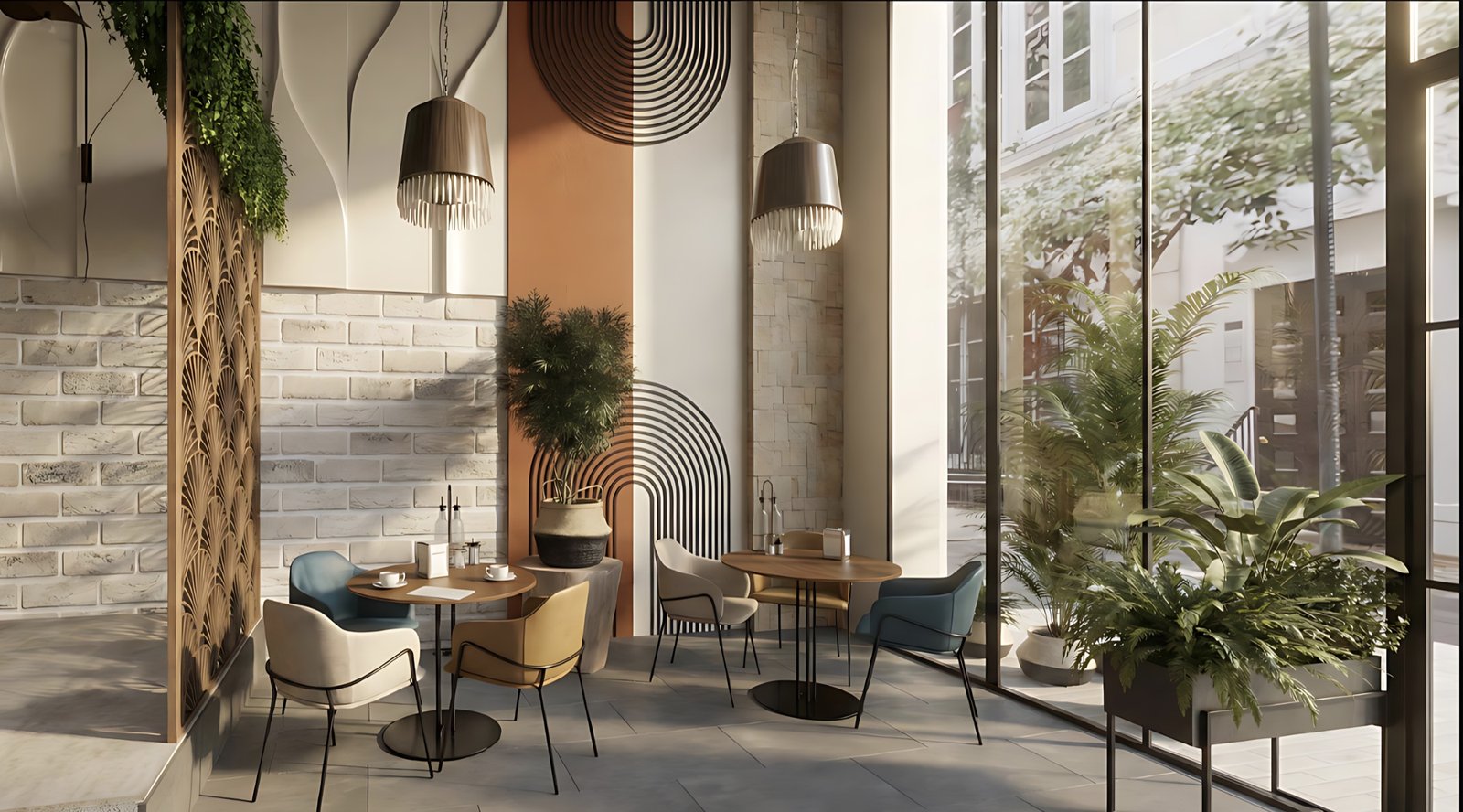
In restaurant projects, colour is not only an aesthetic decision. Warm earth tones work as a neutral backdrop that makes the colours of the food on the table read more clearly and more appetisingly.
Natural wood does the same job and adds a sense of durability and long use, which a space taking heavy daily traffic needs.
The circular motifs repeat across walls and screens, and they carry a practical function alongside their form: they break a large room into zones where a guest feels a degree of privacy without a single wall being built.
This matters in restaurants specifically, where the room must read as open while each table still feels held.
A glass front and warm light
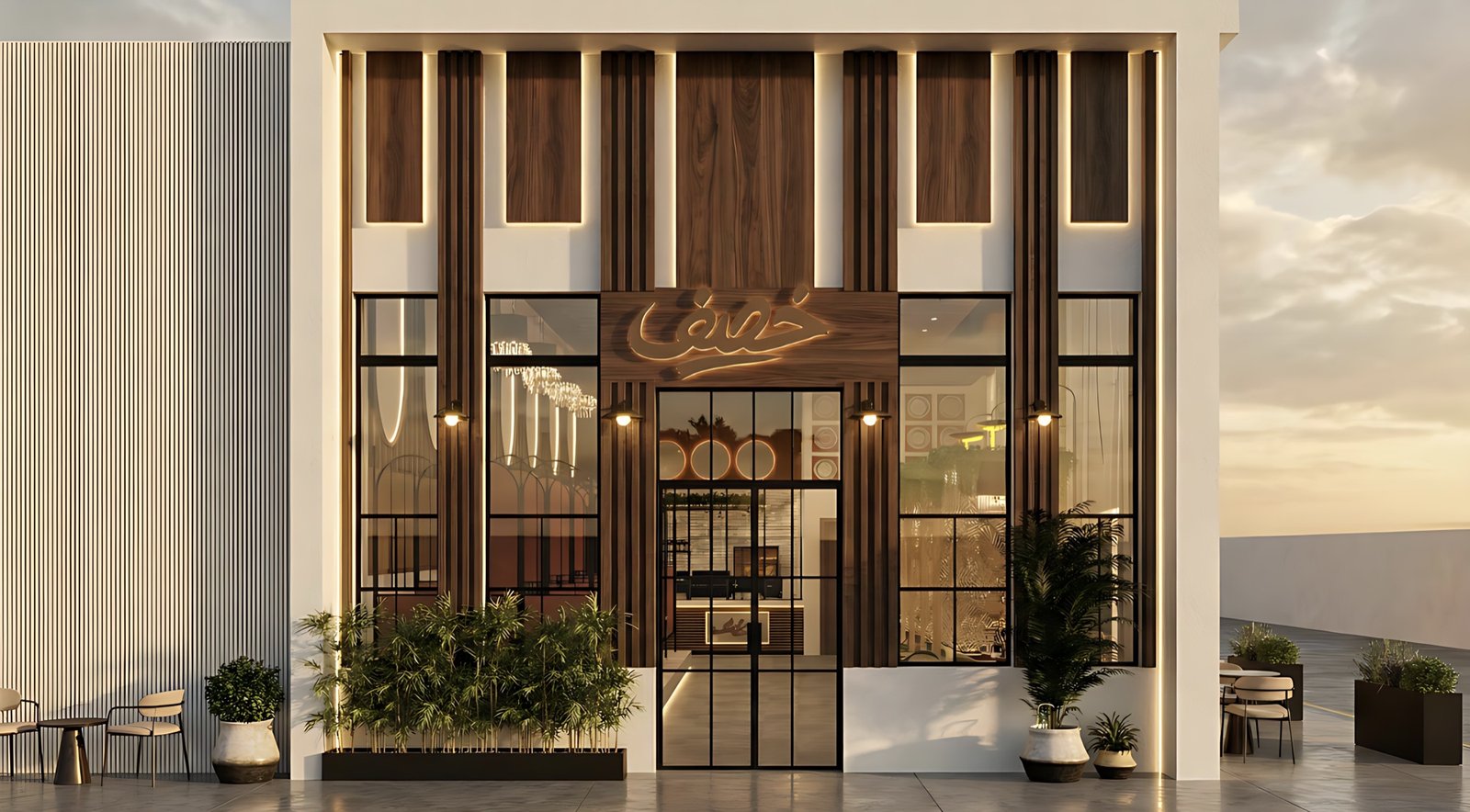
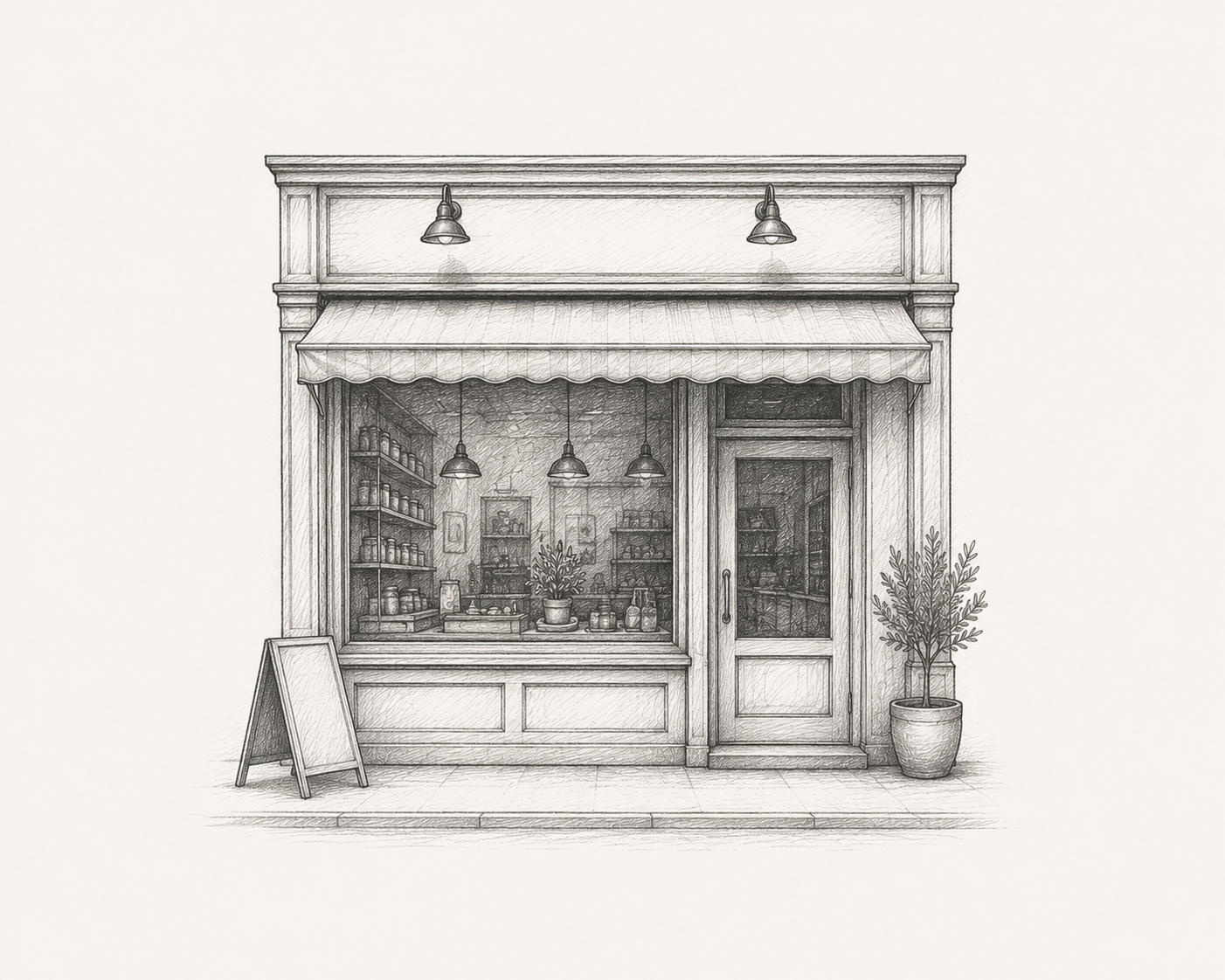
The glazed frontage makes the interior part of the street by day, and gives the project presence without large signage. Daylight enters and shows the texture of the weave and the wood as they really are.
In the evening the equation reverses. Warm lighting takes over, lowering the ambient level and lifting it over the tables, so the room turns from an open daytime space into a closer, warmer evening one.
In short
Heritage read, not copied
Khasf does not reproduce an old form; it takes its logic — a local material, a handmade process, and colours drawn from the same environment. That reading is what makes the project contemporary and authentic at once.