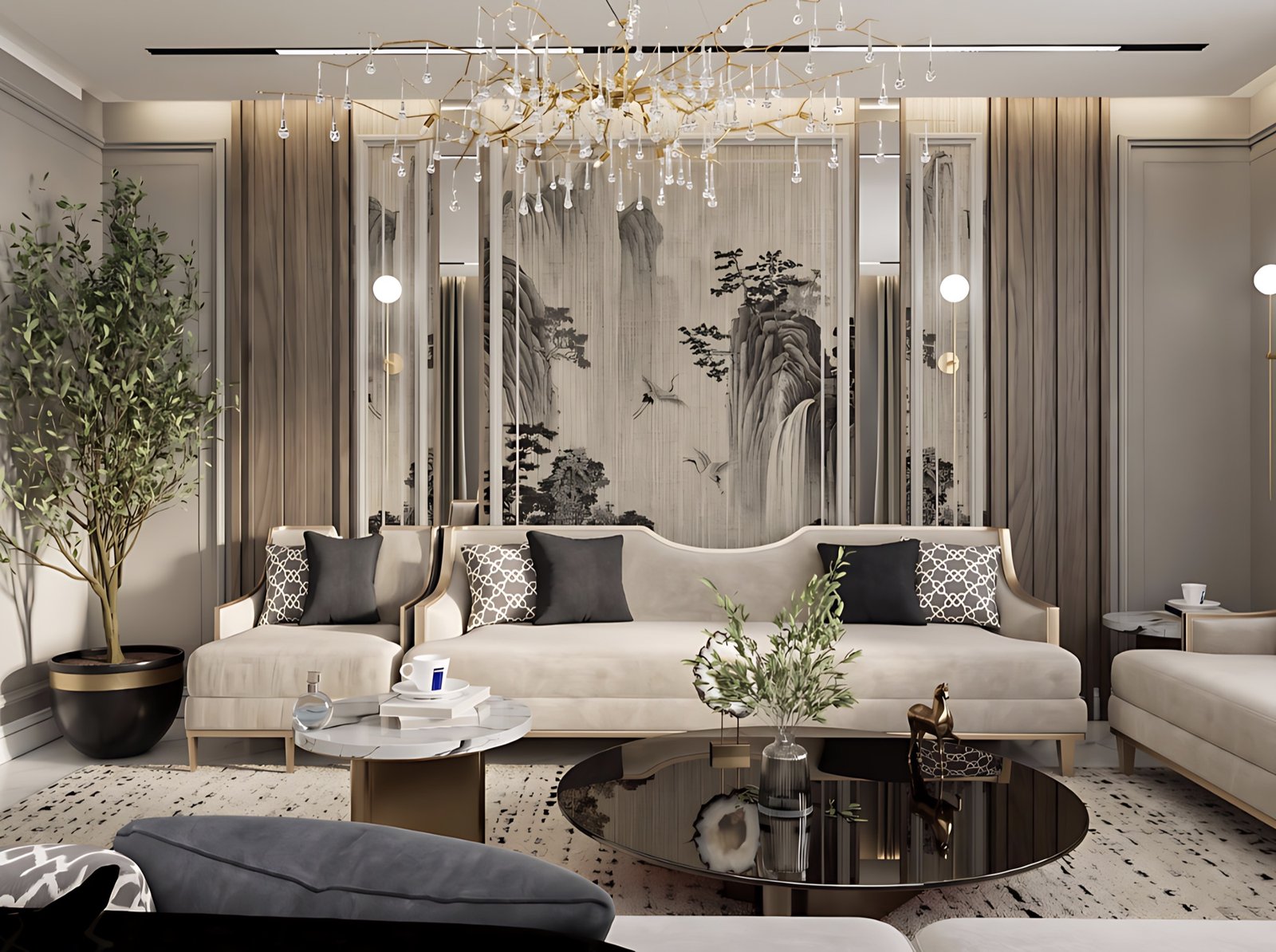
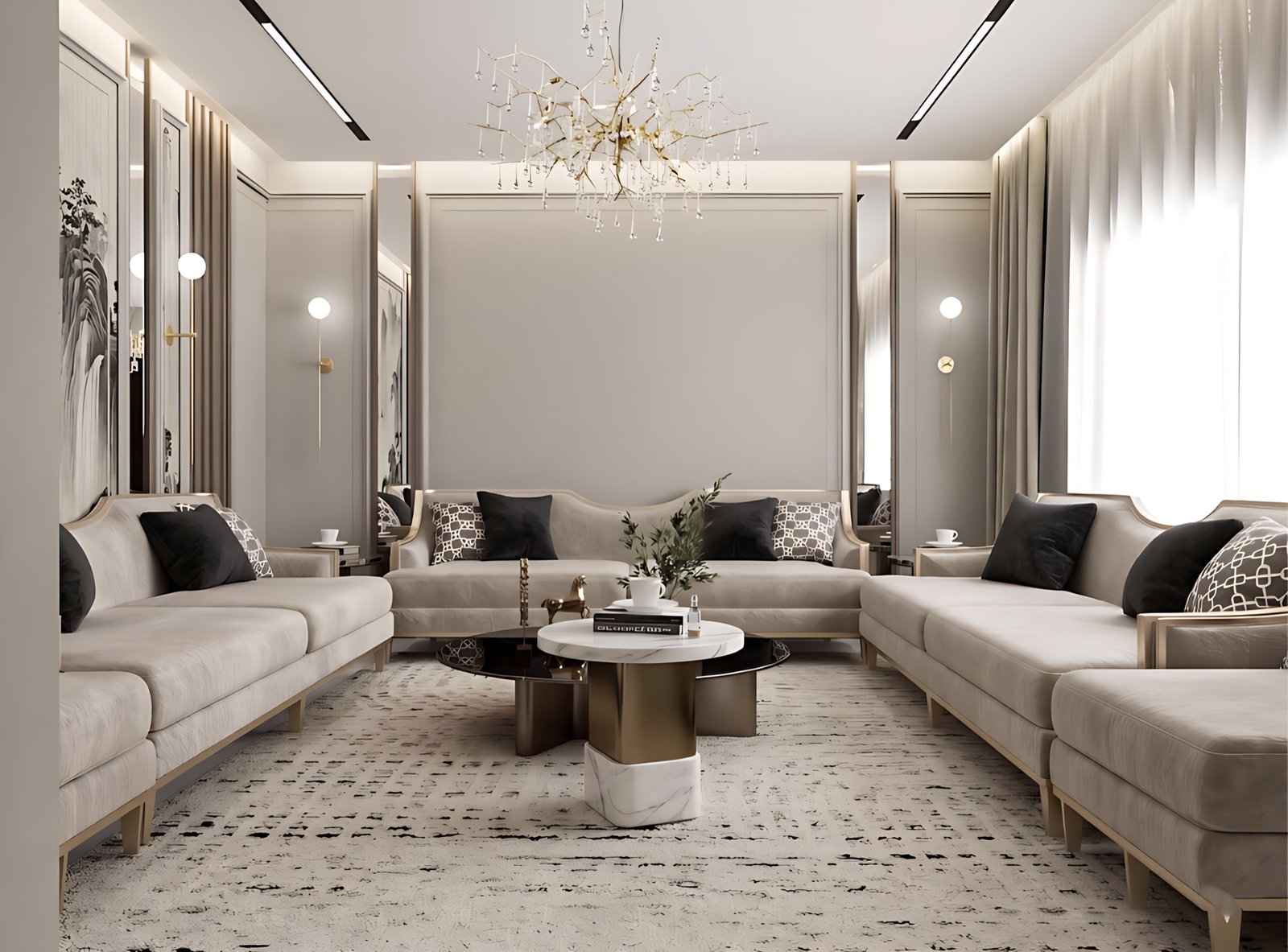
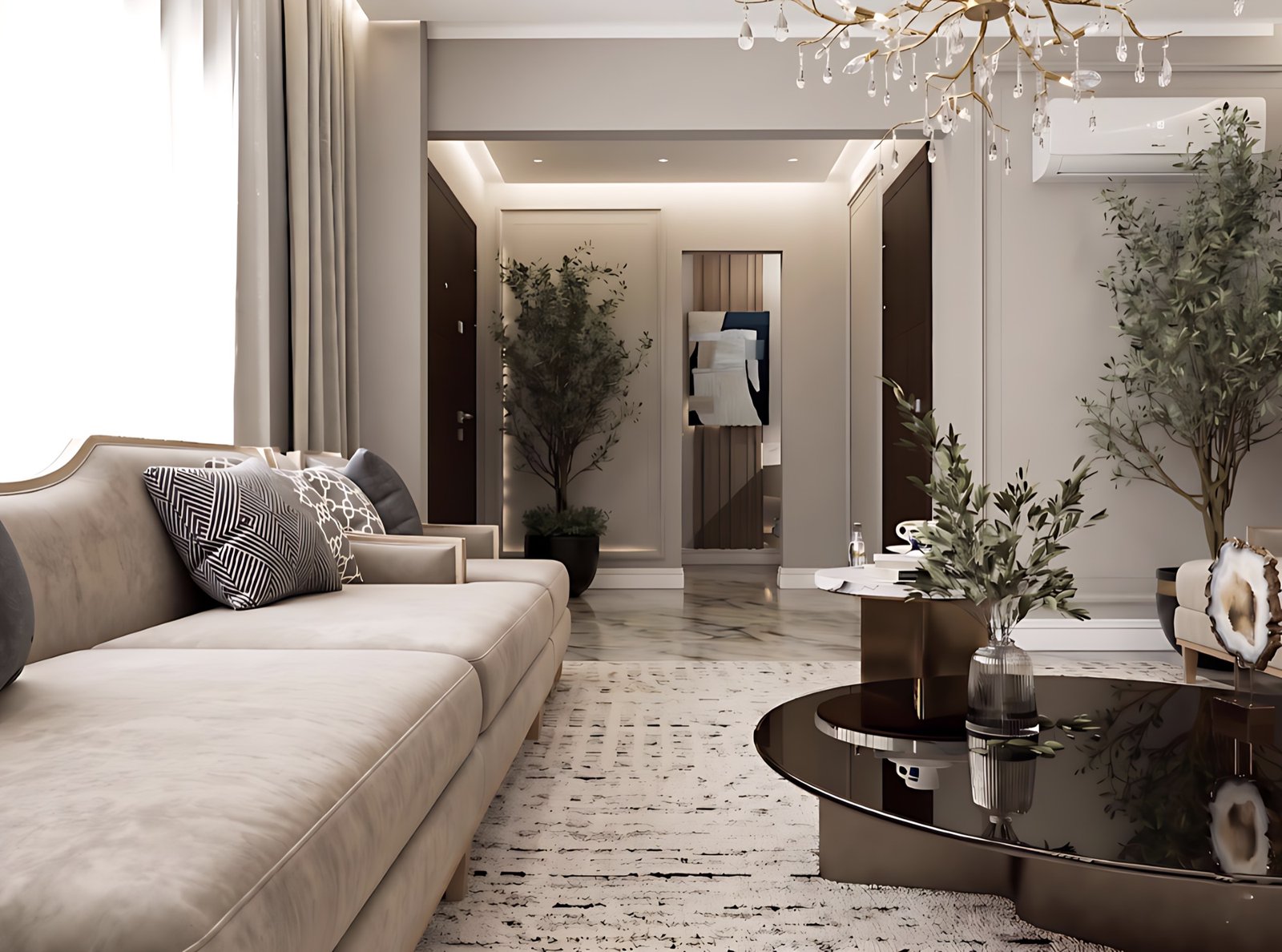
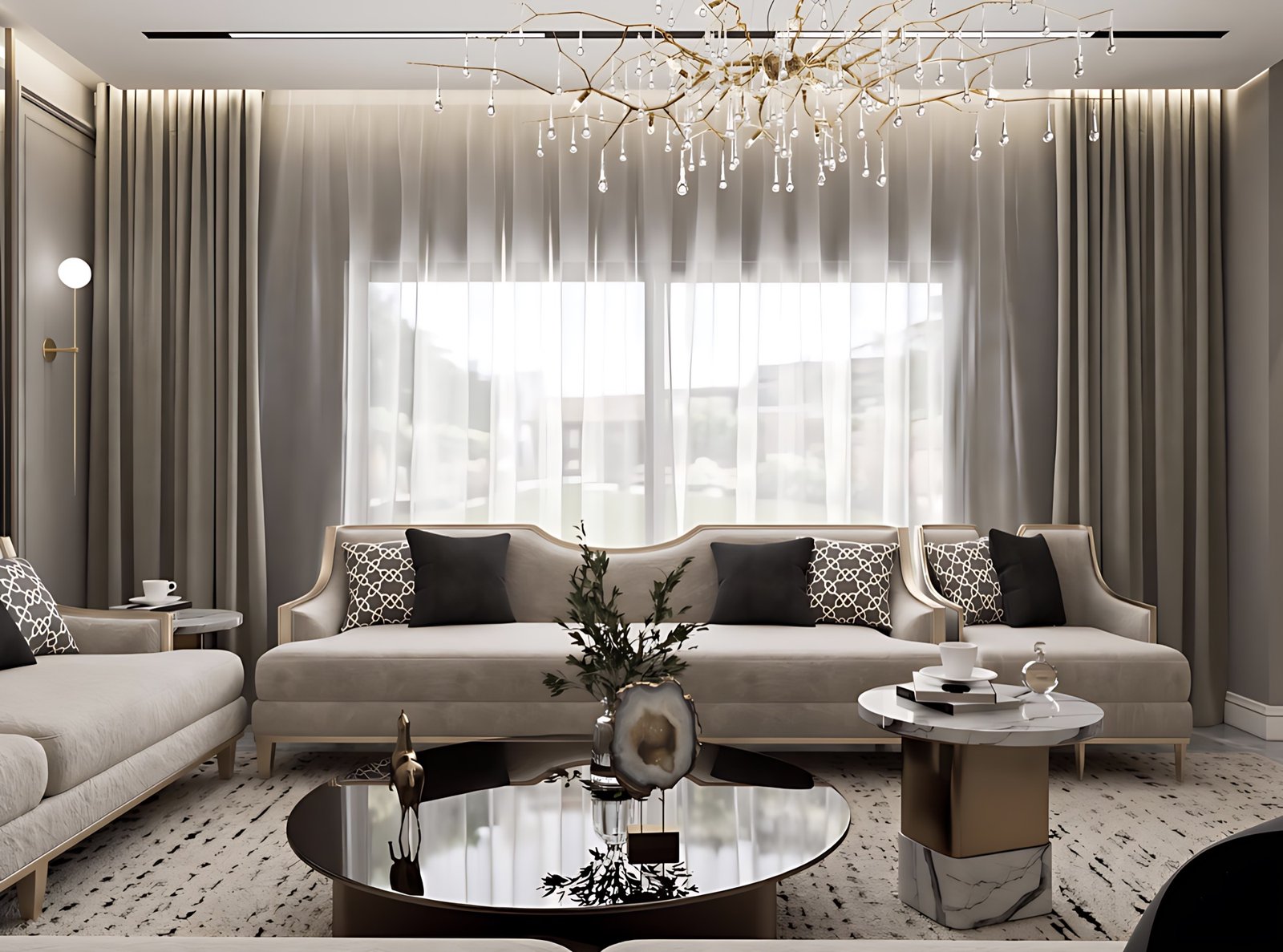
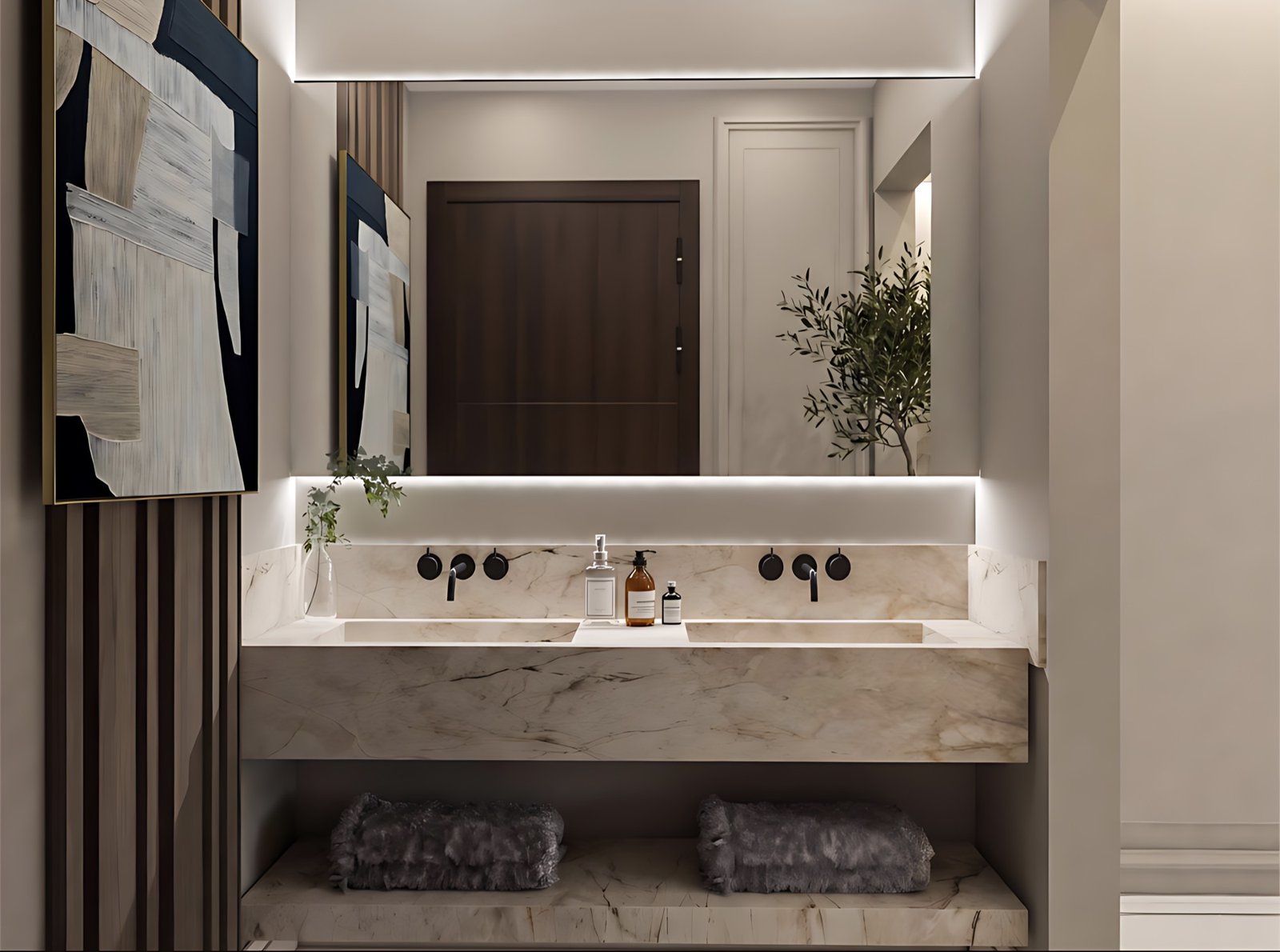
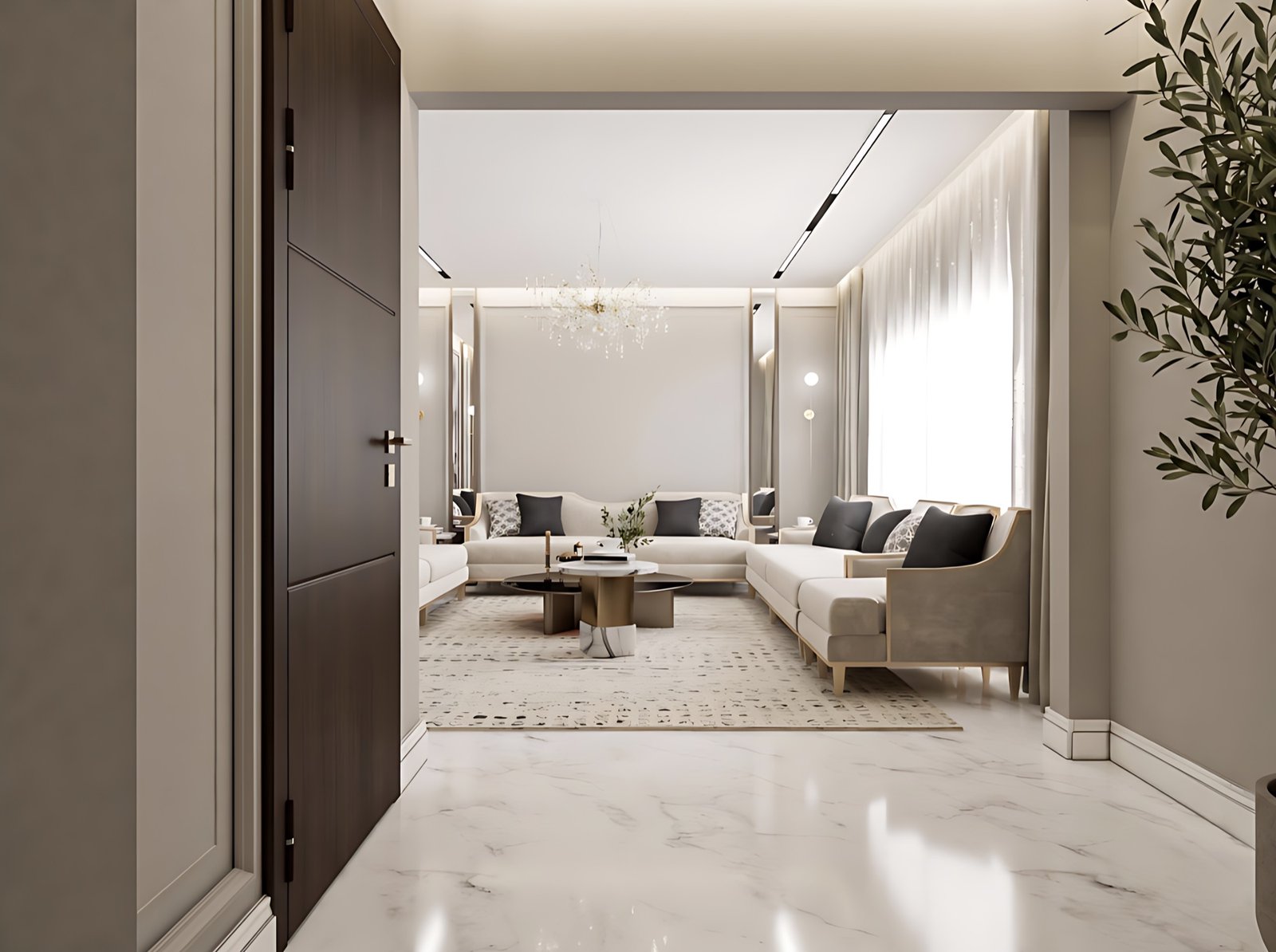
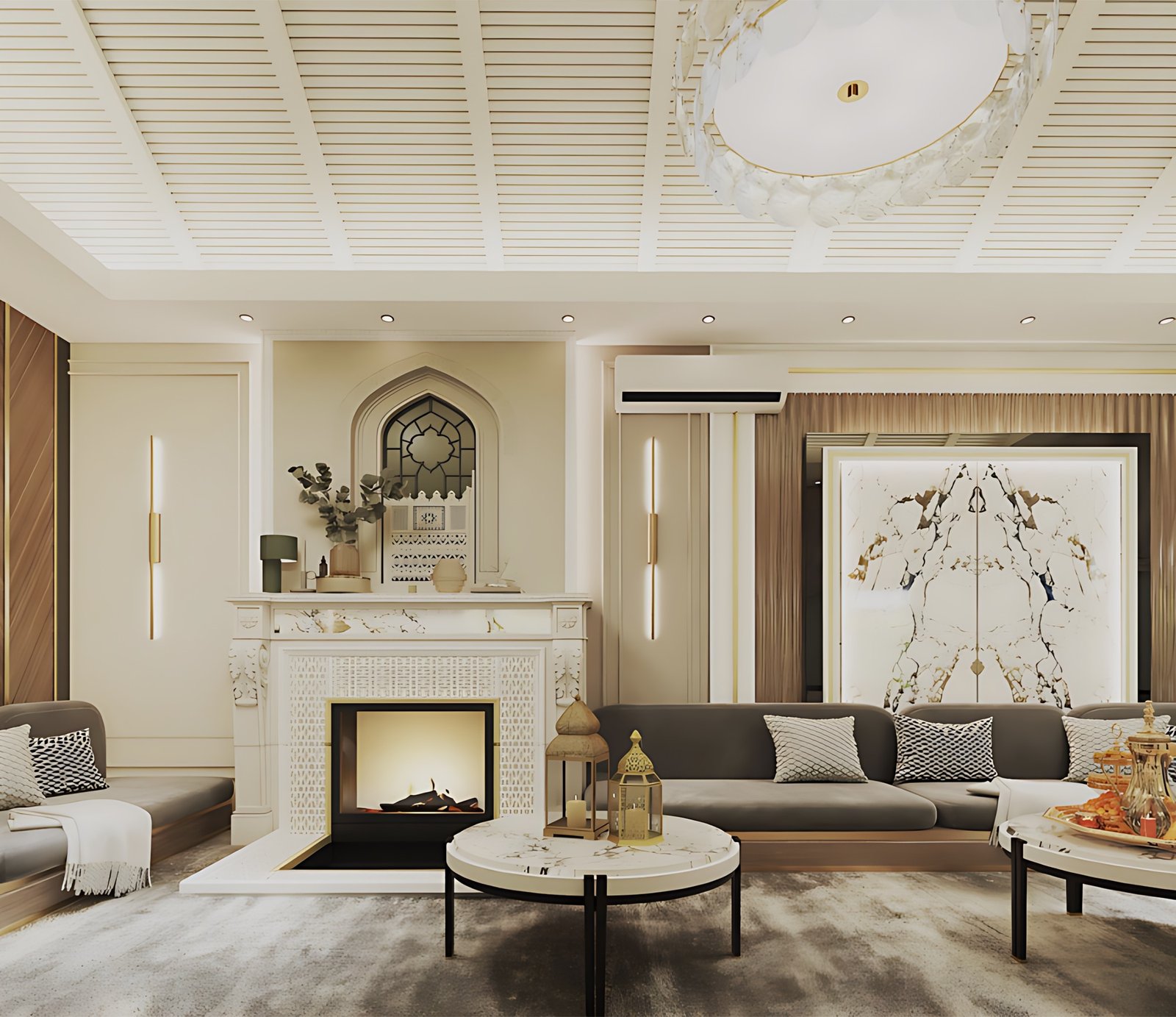
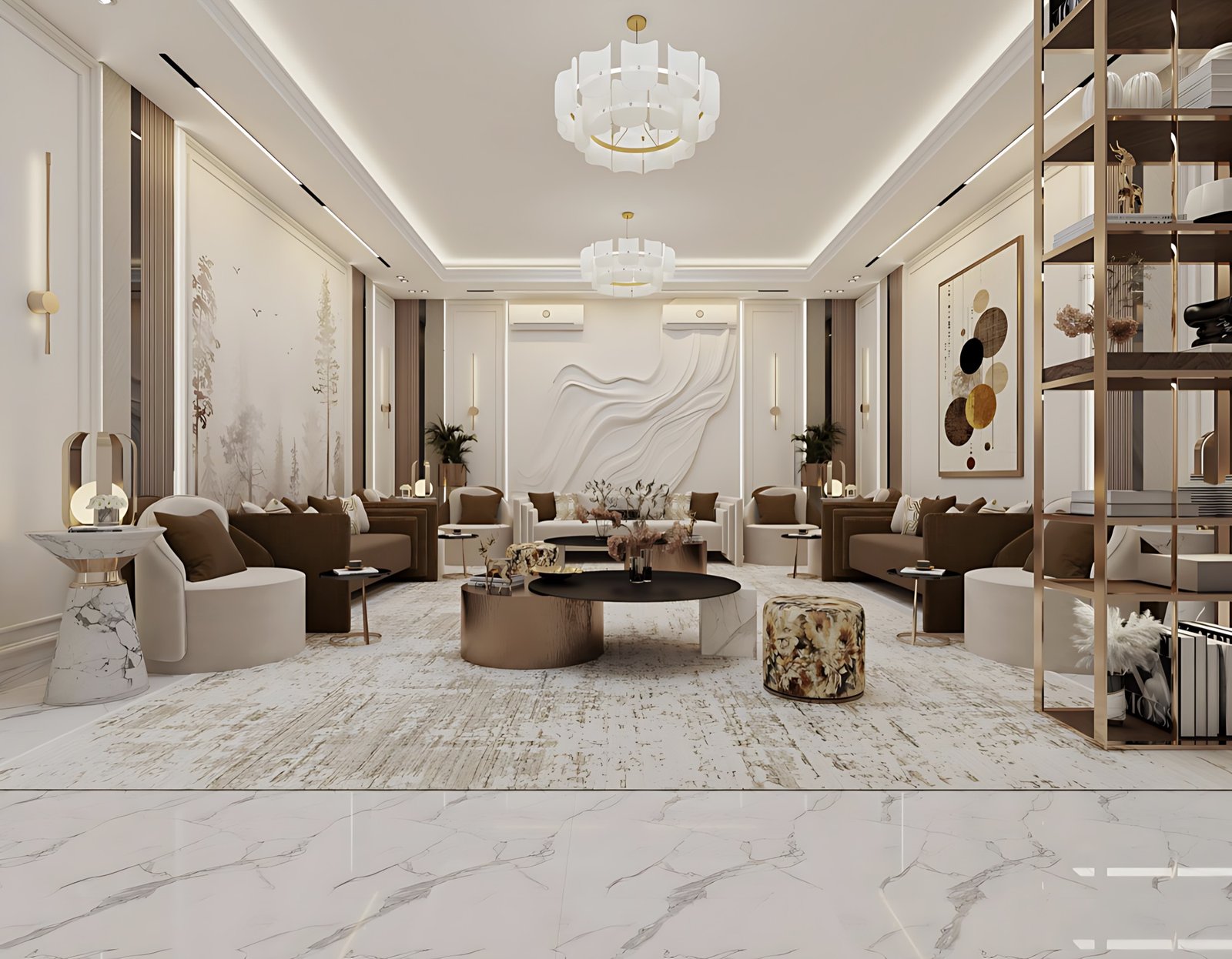
A reception room that builds its richness out of softness: soft materials, close tones, and measured contrast.
Full-height curtains lift the ceiling and soften the edges of the walls.
Low contrast makes the calm
The palette here is deliberately narrow: ivory, warm grey, and the shades between them. When tonal values sit close together, the edges between elements lose their hardness and the room feels still.
The dark timber and black tables are the single exception. They are necessary, because a space with no dark point loses its depth and reads flat, in photographs and in life.
Curtains as architecture
The floor-to-ceiling curtains are treated here as an architectural surface, not a window accessory. Their full height unifies the wall and hides the differing heights of the openings.
The soft material also absorbs part of the acoustic reflection, an effect you never see but do hear in a wide room full of hard surfaces.
The gold chandelier was chosen as a suspended sculpture, with a form that reads in full daylight. It is the upper focal point that balances the weight of the furniture below.
The marble table provides contrast in texture: a cold, hard surface among soft fabrics, giving hand and eye a variation that keeps the room from monotony.
In short
Softness is a design decision
Quiet luxury is not the absence of presence. It is materials chosen to be touched before they are seen, a narrow palette that keeps the space unified, and a few dark points that preserve its depth.