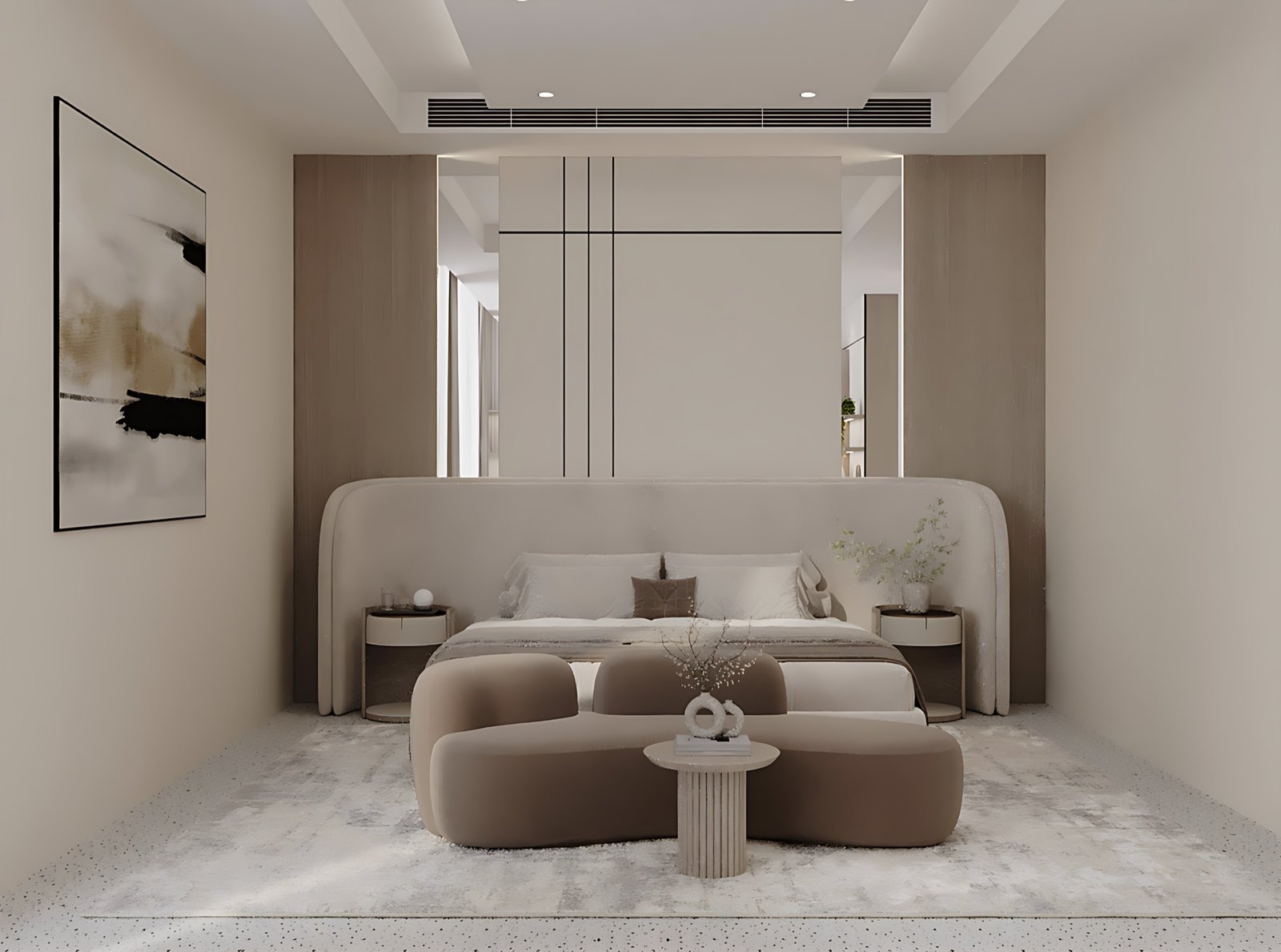
One room doing two jobs, without ever looking split between them.
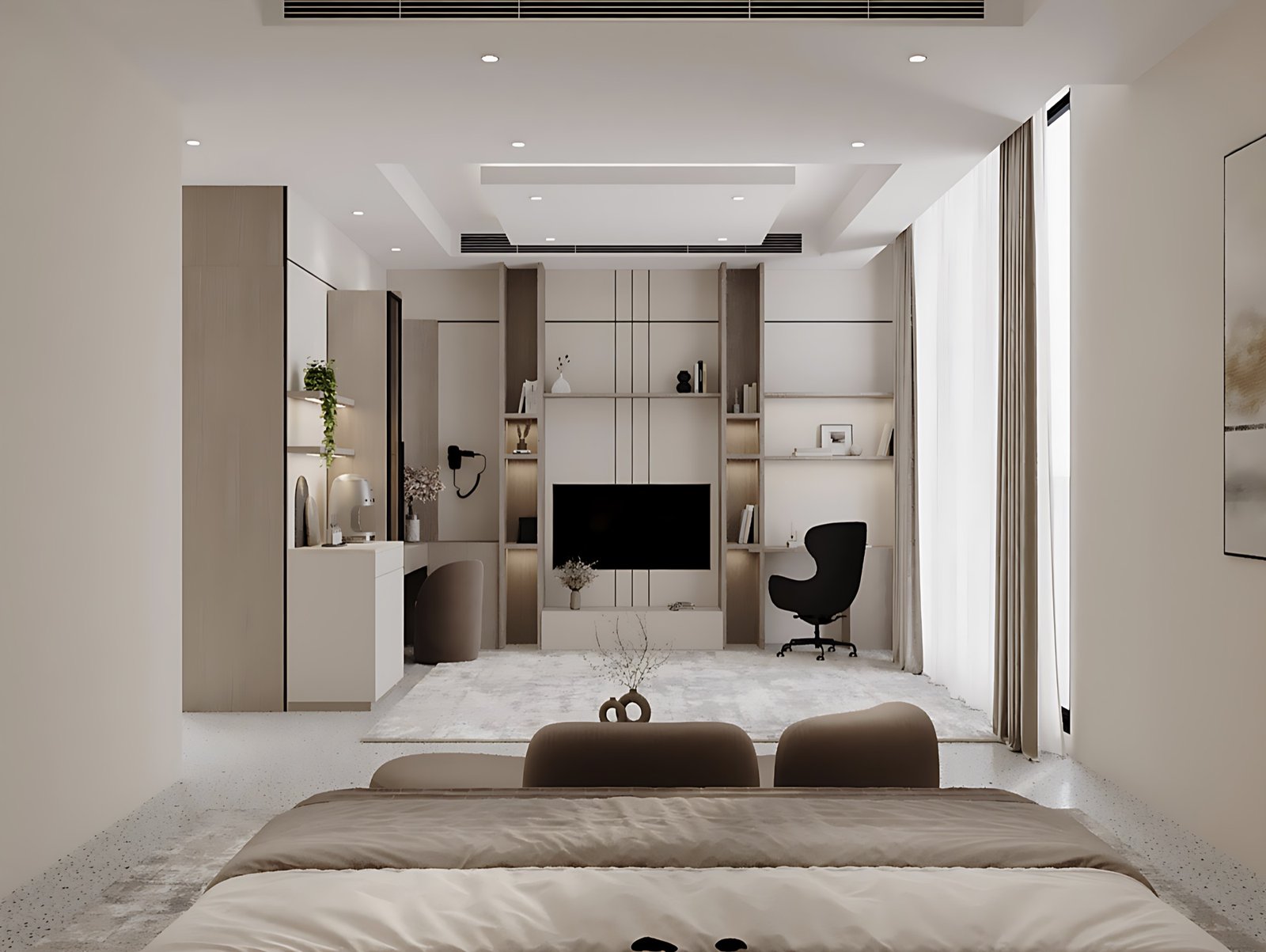
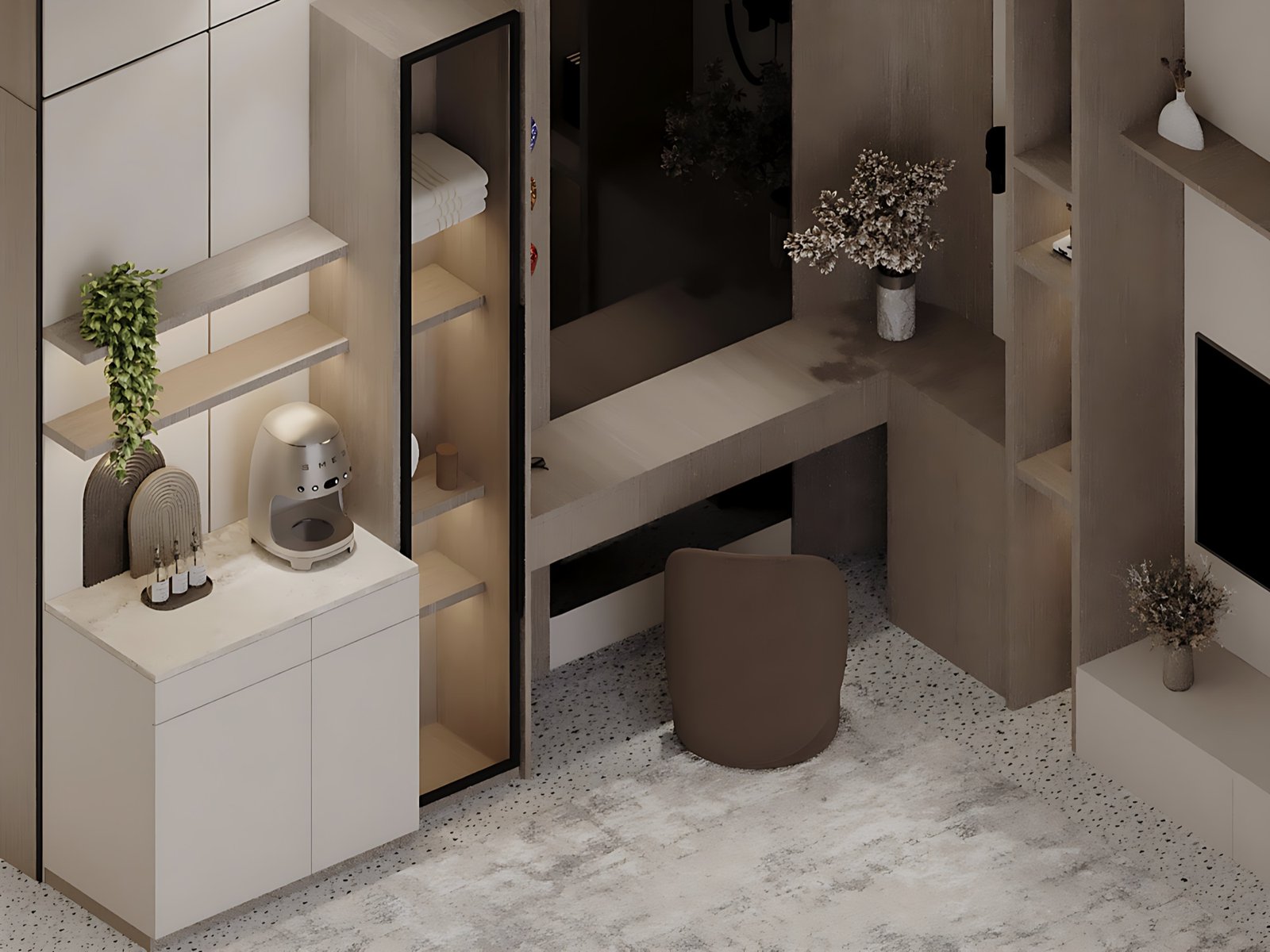
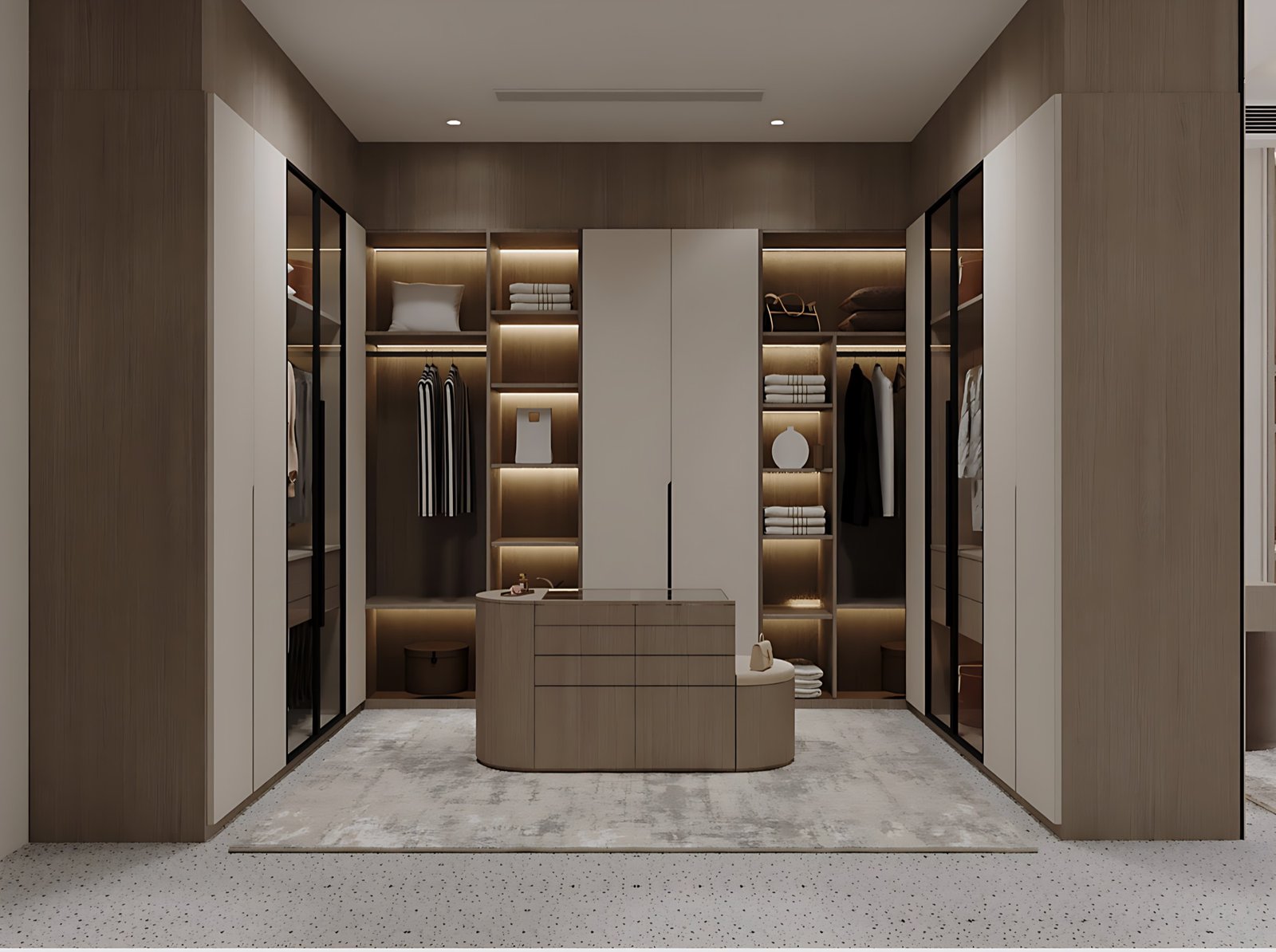
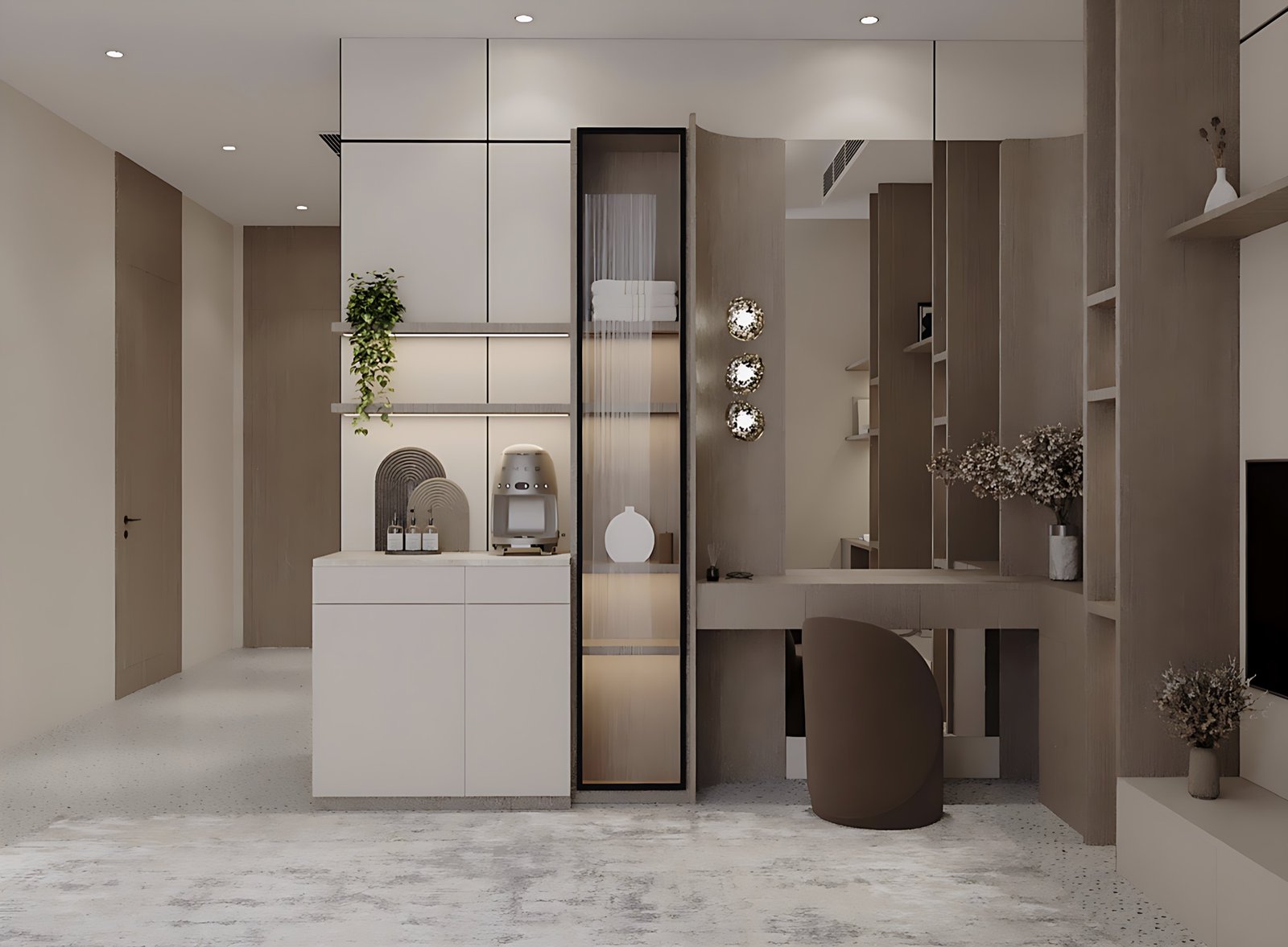
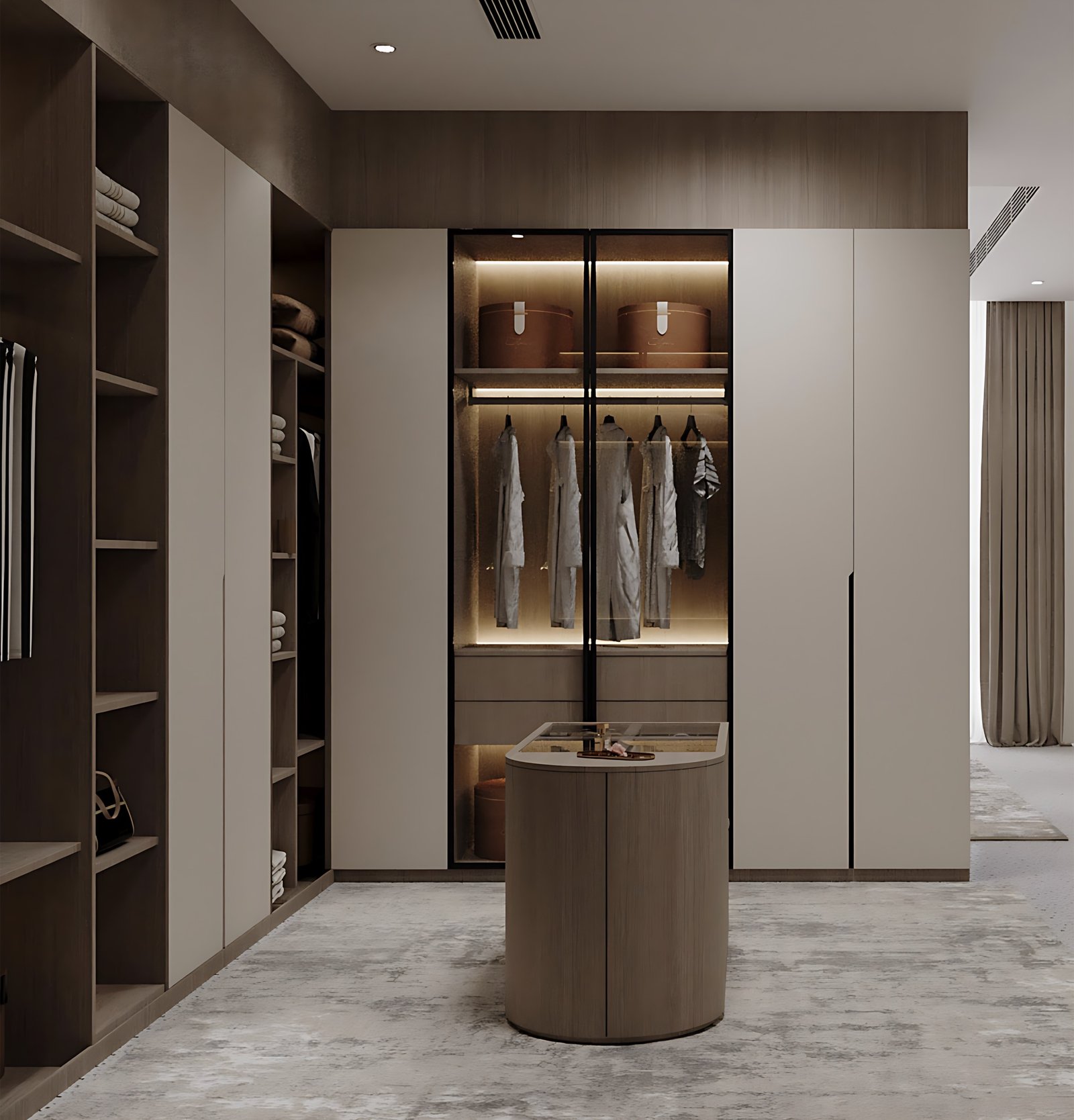
The built-in unit gathers storage, display and lighting into a single wall.
Two functions in one room
Working from home is no longer the exception, and a room dedicated entirely to it is not always available. The answer here was to fold the work area into the relaxing area so the boundary never shows.
The key is one visual unit holding both: a single wall carrying the library, the storage and the television, so the idea of a room cut into two halves with different characters disappears.
The television joins in rather than dominates
Setting the television into the wall instead of hanging it on the face solves two problems: it hides the cabling, and it makes the black screen part of the wall composition rather than a dark mass floating in the middle of it.
When the screen is off, the wall stays balanced. That is the real test of any media wall.
Open compartments break the weight of closed storage and give the wall depth. Concealed lighting inside them turns the shelves from storage into a display face after dark.
The balance between open and closed is deliberate: what is shown stays sparse and chosen, and what is stored disappears behind doors with no visible handles.
Daylight and sheer curtains
Sheer curtains spread the daylight rather than blocking it, which is essential in a space used for long working hours. Diffused light reduces glare on screens and rests the eyes.
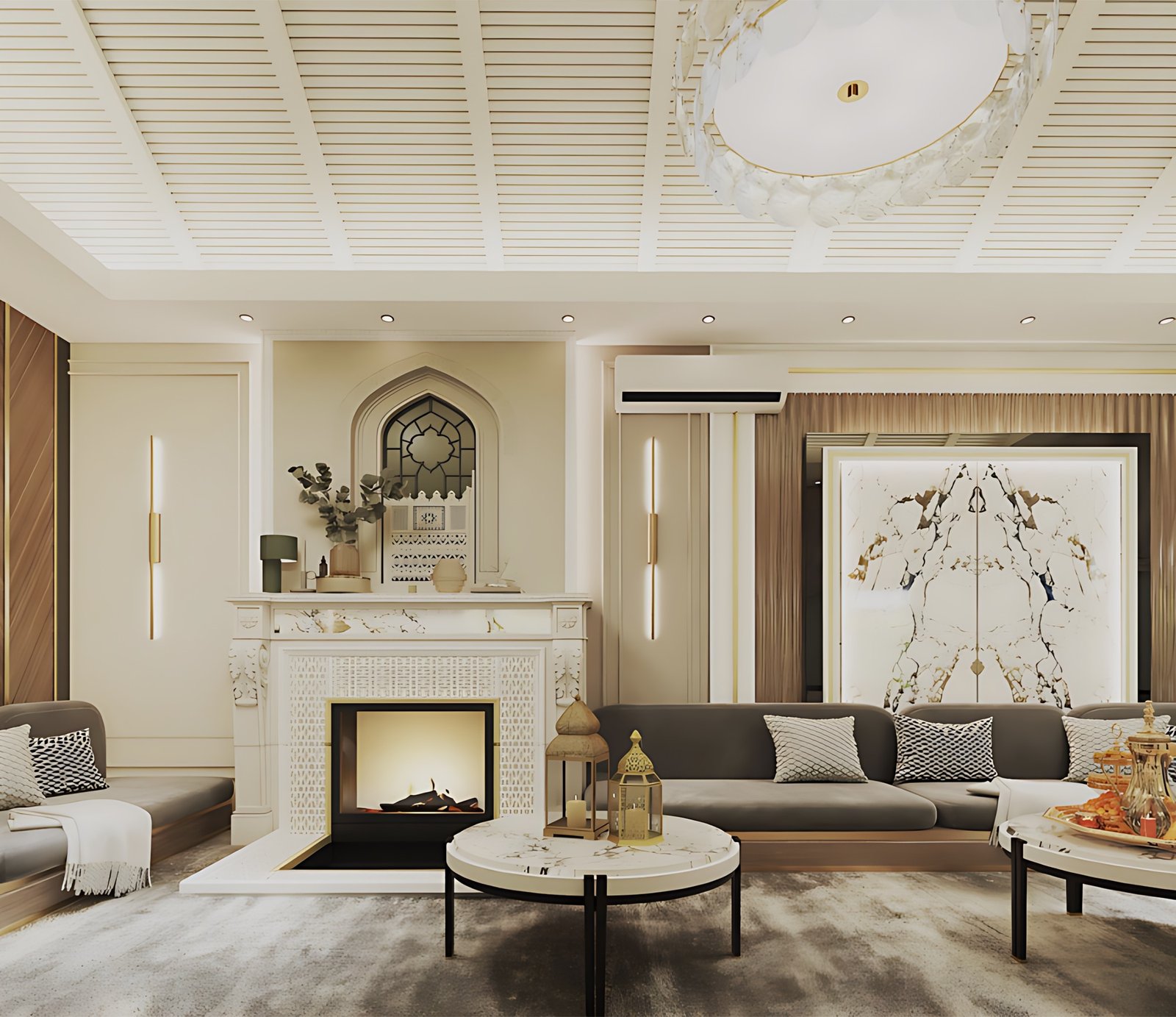
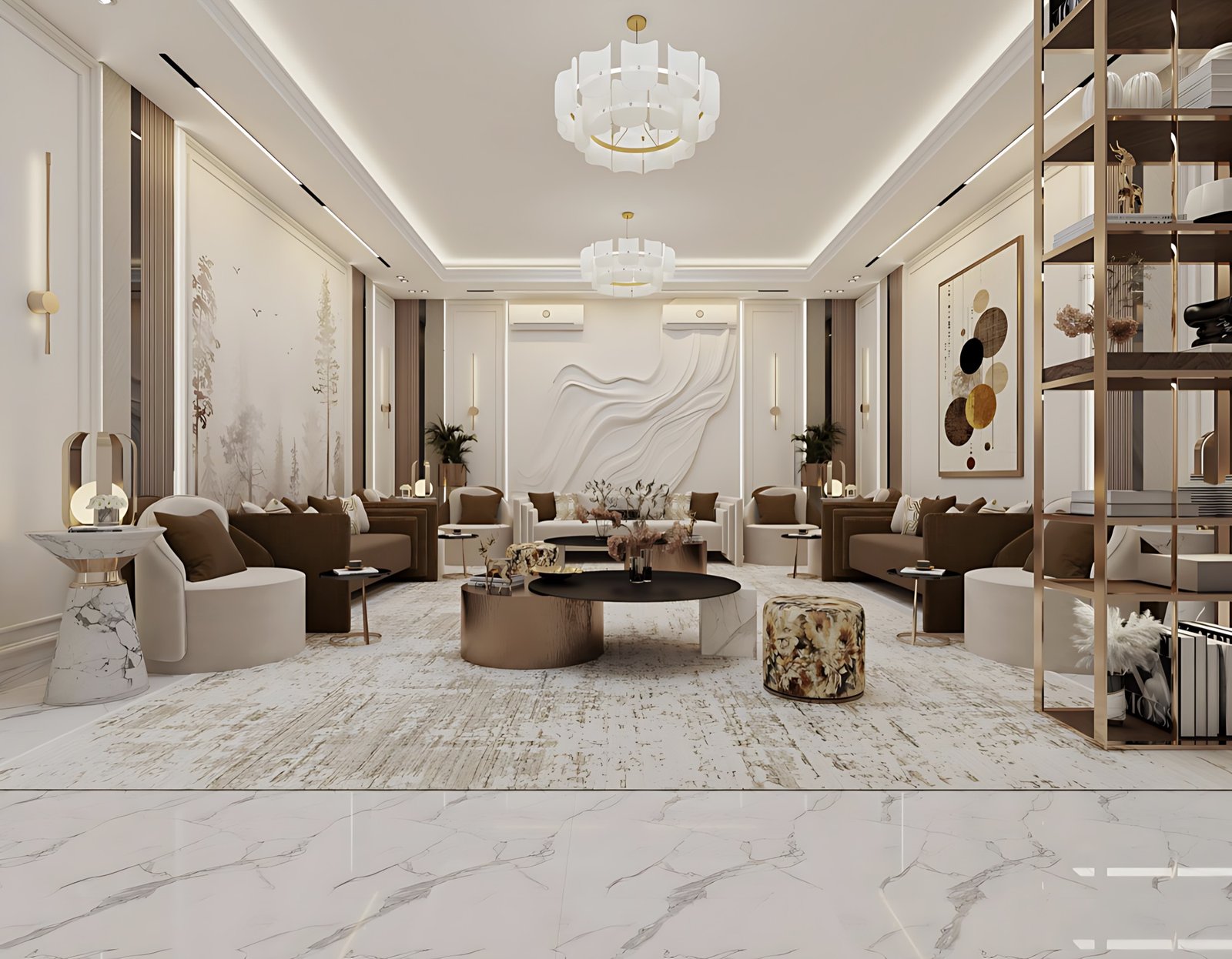
Wood, earth tones and a pale rug keep the overall mood warm, so the room does not turn into a cold office the moment the working day starts.
In short
Order that allows living
A multi-use space works when the storage is sufficient and the composition is calm. Then the resident moves from work to rest by changing how they sit, not by changing the room.